
The most repeated advice in copy trading is to follow the smart money. Find a wallet that's up, set an alert, mirror the buy. That advice gets the order backwards. A wallet tagged as smart money is a claim about past behaviour, and an alert is a note that the claim survived one more test in public. Neither is a buy signal.
Treat an alert as a hypothesis with a timestamp. Your job is to try to break it. Is the entry already crowded? Is the fill still there? Does the record hold outside the window the leaderboard displays? Most alerts should fail, and rejecting them is the work.
What follows is the order a trader needs: what a tracker measures, eight tests a wallet has to pass, why rankings mislead, why a confirmed on-chain buy isn't a copyable trade, where finality and slippage bite, and the rules to write down before any money moves.
Table of Contents
- What a Smart Money Tracker Monitors
- How to Judge a Trader Before You Copy
- Why Leaderboards and Popular Wallets Mislead
- Crowded Entries and Why Alerts Are Not Copyable Trades
- Execution Timing, Finality and Slippage
- Risk Differences Across Memecoins, Perps and Prediction Markets
- Set Your Copy Rules Before You Start
What a Smart Money Tracker Monitors
A smart money tracker follows the on-chain wallets of traders who have a record worth watching, then puts their buys, sells, open positions and realized results in one place. It's a shop window. You see what someone bought and sold, and sometimes what they paid. You can't see why, and you can't see what the price did between their fill and the moment you looked at the glass.
What typically sits inside that window:
- Buy and sell events. The token, the direction, the size, and how recently it happened.
- Entry and exit context. The market cap when the trader entered and the market cap when they left.
- Open positions. What's still held, and therefore what's still exposed.
- Leaderboard rank and realized PnL. A headline number, usually sliced into 24 hour, 7 day and 30 day windows.
The word smart is a label. Trackers apply it, or their users do, and it survives right up until the wallet has a bad month. Nothing in the data verifies it.
A tracker shows what a wallet did, not what it will do next.
That gap is where most copy decisions go wrong. A tracker reads behaviour, and behaviour repeats unevenly. Anyone who wants to go further on reading wallet flow can start with these onchain analysis tools, though the checks matter more than the tooling.
The rest of this page covers a checklist for judging a trader, the traps in rankings and crowded entries, the distance between an alert and a copyable trade, and the limits to set before you copy anything.
How to Judge a Trader Before You Copy
No single number settles whether a trader is worth copying. Not realized PnL, not win rate, not rank. What settles it is whether the same behaviour shows up across several measurements and survives a market phase that wasn't kind. Run these tests in order before you size a single copy.
| Test | What it reveals | Red flag |
|---|---|---|
| Realized PnL over several windows | Whether closed trades made money, and whether the result holds beyond one short window | A strong result in one short window and nothing before it |
| Win rate with average win and loss size | Whether the wins are large enough to cover the losses | A high win rate with losses much larger than wins |
| Median holding time | How long the trader stays in a position, and how fast you would need to act | Holds that are too short for you to match before the price moves |
| Max drawdown | How far the account fell from its peak before recovering | Deep drawdowns the headline PnL does not mention |
| Open positions and exposure | What the trader still holds and how much is at risk | Large, concentrated positions in illiquid tokens |
| Leverage and liquidation history | How much the trader borrows against each position | High leverage, especially on perps, with past liquidations |
| Trade frequency and concentration | How many trades were made and whether one or two produced most of the profit | Profit that depends on one or two outsized wins |
| Performance across market conditions | Whether results hold in quiet and volatile periods | Results that appear only during one hot market phase |
Start with realized PnL, then split it by window. A trader up on 30 days and flat to negative on 7 is cooling off. A trader up on 7 with nothing before it may have had one good week. Win rate alone tells you almost nothing until you put average win and average loss beside it: a 70% hit rate with losses five times the size of wins is a losing account wearing a good costume. Median holding time tells you whether you can physically keep up. If the trader's median hold is minutes and you check alerts after work, you're not copying them, you're buying their exits.
Why the measurement window decides the answer
The window matters because platform design pushes copiers toward short ones. A 2024 quantitative study of two major cryptocurrency copy-trading platforms found that leaderboard design and displayed performance metrics significantly influence copier decisions. The researchers observed that rankings based on short-window aggregated copier PnL were strongly associated with portfolio selection, even though such rankings can be gamed and may not represent durable risk-adjusted skill. In one observed promotion cycle, copiers initially earned profits for roughly one week, but performance then deteriorated sharply; portfolios in the lowest-performing quarter of a promoted group lost more than USD 15,000 within ten days, according to the ACM study of copy-trading platform rankings.
The study's implication for anyone reading a tracker is blunt: raw realized PnL and rank are not sufficient signals. Separate realized from unrealized PnL, because open gains can reverse before you ever see them close, and check drawdown and holding-time distributions rather than a single average. On Hyperliquid or any market using borrowed funds, the same study emphasises that borrowing magnifies both gains and losses, which makes position size, liquidation exposure and downside history essential filters before copying.
The rule: a trader passes only when the same behaviour appears across more than one window and more than one market phase.
Say a trader shows a strong seven day number, almost all of it from two trades, plus a deep drawdown the month before. The headline passes the eye test and fails the checklist. That's a rejection, and rejections are the useful output.
Why Leaderboards and Popular Wallets Mislead
A leaderboard is a discovery list. Rank is not a measure of skill, and the quantity it sorts is often attention.
A 2024 quantitative study of two major cryptocurrency copy-trading platforms compared ranking methods with follower behaviour. Portfolio popularity lined up with how the platforms ranked portfolios, not with underlying performance. Short-horizon signals, especially seven day aggregated copier profit and loss, tracked popularity more closely than 30 day return-on-investment rankings, according to the study of copy-trading leaderboard behaviour.
The board is showing you what already got copied. A seven day number can come from one trade. Followers arrive after that rank is visible, which is after the conditions that produced it have changed.
Survivorship does the rest of the editing. Wallets that failed, stopped, or changed strategy leave the page. What remains is the set that still looks worth opening. Latency and thin labels make that set worse: a wallet marked as a smart buyer can be an early liquidity provider who sells before the pool dies. The tag does not say which.
Leaders on these boards can draw substantial follower capital. How a platform builds the rank therefore steers real money, even when the rank is mostly a popularity sort.
Use the board to build a shortlist of three to five names, then try to reject them. On copy.top, traders are named and each public page shows realized PnL, win rate, median hold time, open positions, and recent trades. Read that page as evidence to test. A single hot window, or a label that does not match the exits, is a rejection. Rejections are the useful output of the shortlist.
Crowded Entries and Why Alerts Are Not Copyable Trades
The Bank for International Settlements analysed daily crypto-exchange-app activity across 95 countries from 2015 through 2022. Its database showed that rising Bitcoin prices were followed by more downloads and active use of crypto-trading apps. Approximately 40% of new users entering during these periods were men under 35, a demographic the study characterises as relatively risk-seeking. The researchers then modelled users' likely purchase timing and found that an estimated 73% to 81% of retail investors lost money on their initial Bitcoin investment as prices subsequently declined, per the BIS working paper on crypto app adoption.
Translate that into trader terms. When a token trends, the newest buyers are the crowd, and the crowd is late. Rapid user growth reflects momentum, not superior information. An alert that reaches you after the trend is visible is competing with everyone else who saw the same thing.
The gap between the alert and your fill
An alert and a copyable trade are separated by a sequence. The trader's transaction confirms. The alert reaches you. You read it, decide, and submit. Your fill lands at a different price, on thinner liquidity, a block or two later. By then the wallet you were watching may be distributing into the move rather than accumulating.
Smart money tracking is probabilistic, not predictive. Recent analysis of smart money tracking on Solana describes the same constraints: data latency, incomplete labels and survivorship bias, since successful wallets stay visible while failed ones vanish. Thin liquidity on Solana memecoins and EVM tokens widens every one of those gaps.
Run three checks before you act:
- Compare market caps. What cap did the trader enter at, and what cap is the token at now? A double in market cap between their fill and your alert is not the same trade.
- Look for the exit. Has the same wallet sold into this move already? Check recent sells, not just the buy that pinged you.
- Re-price the trade. Would you still take it at a worse price, with worse liquidity, after fees? If the answer is no, it was their trade, not yours.
If you can't answer fresh entry or late signal within a few minutes, pass. A rejected trade is a valid result.
The best tracker for this job helps you decline, not pile up notifications.
Execution Timing, Finality and Slippage
Treat a tracker print as a hypothesis about finality, not as a closed trade. On Solana the commitment status is the first test: it tells you how much of a trader's position and PnL is real, and how much can still disappear.
| Status | What it means | What the tracker should do |
|---|---|---|
| Processed | The transaction sits in a block the leader produced | Show it as pending only, never as a settled trade |
| Confirmed | A supermajority of validators has voted for that block | Send a low-latency alert and keep the record provisional |
| Finalized | The block is irreversible | Update positions and PnL from this state |
| Expired | The transaction was not committed inside the validity window | Mark it failed and retry without opening a second order |
Confirmed is not finalized. A supermajority vote makes a block hard to unwind. Finalization is the point at which it does not come back. A confirmed transaction can still fail to stick. That outcome is uncommon, and it is enough to poison a copy if you book the trade as done. A transaction that misses the network's validity window expires. It does not land later under the same signature.
Check the status before you size anything off the alert. A position counted on a confirmed transaction that later drops is phantom exposure: the PnL on the card is wrong, and an exit or stop built on that notification can fire against a position that never existed. A retry of an expired transaction can look like a second buy. Acting on both doubles the entry for one idea.
Slippage is the price test that follows finality. The trader's fill is not your fill. Compare their entry with the price you can still get, then decide whether the remaining gap is a trade you would take on purpose. How to measure that gap is covered in this guide to slippage tolerance in copy trading.
If the status is short of finalized, or the price you can get no longer matches the hypothesis, reject the alert. A skipped copy is the correct result.
Risk Differences Across Memecoins, Perps and Prediction Markets
A tracker alert is a reason to inspect a trade, not a reason to place one. The market determines what can go wrong after the alert: a thin pool can worsen a token fill, borrowed funds can force a perp exit, and a prediction-market position can lose its full value.
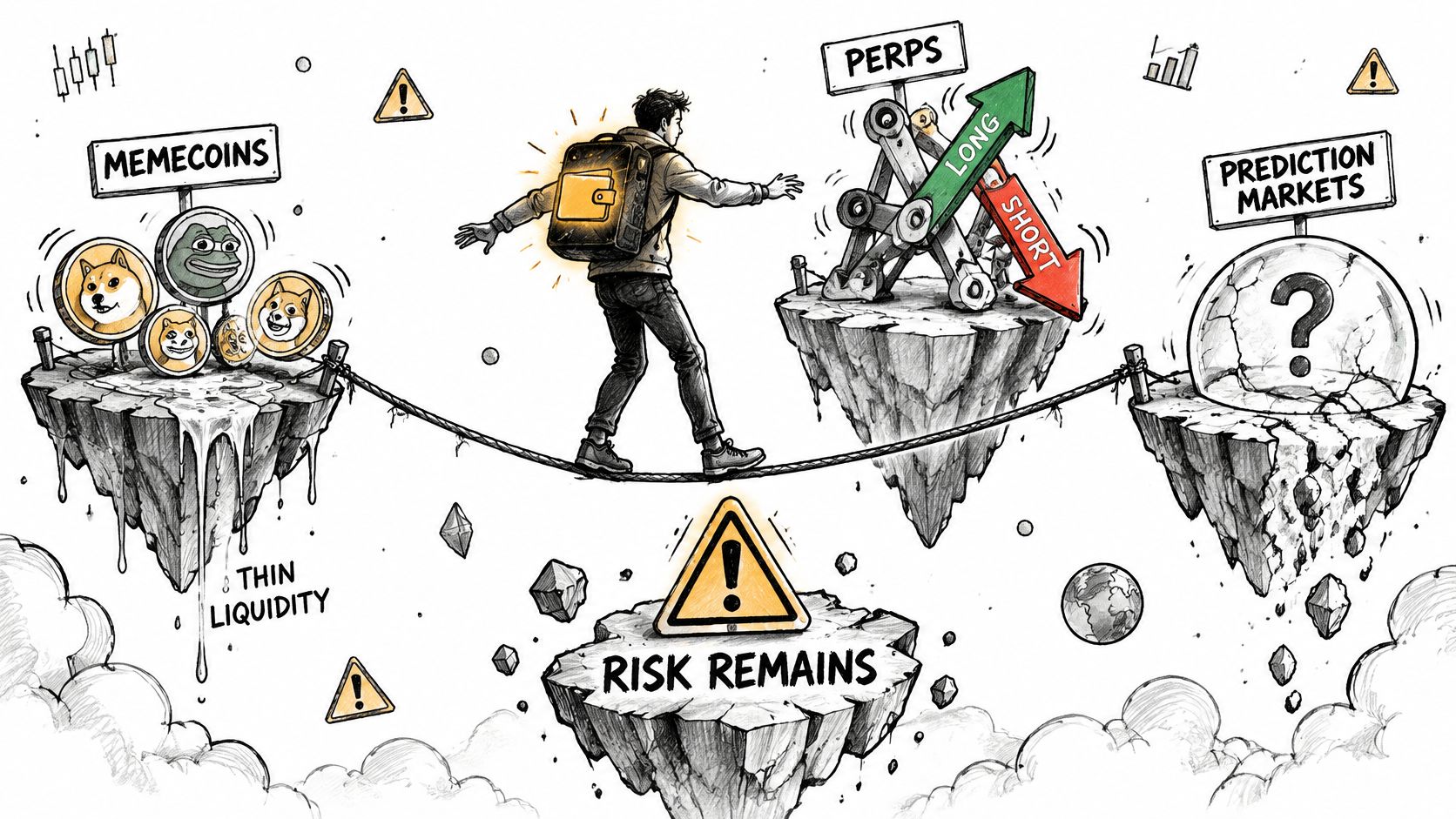
- Memecoins on Solana and EVM chains. Thin liquidity and fast price changes can make your execution worse than the trader's. Check pool liquidity and compare your intended order with it. If your order is a meaningful share of the pool, your own entry may move the price against you.
- Hyperliquid perps. Borrowed funds magnify gains and losses, and liquidation can close a position before the trader's thesis plays out. Check the trader's margin use and current position size before copying. The International Organization of Securities Commissions warns that copy trading can encourage excessive risk-taking and expose inexperienced users to unsuitable products in its report on copy trading regulation.
- Prediction markets. A position depends on an event resolving one way, and it can go to zero. copy.top also covers Polymarket traders. Before copying one, check how much of their book sits on a single outcome.
Position controls can limit the cost of an individual trade, but they do not fix a poor entry or guarantee a fill at your chosen level. A trader's result and a follower's result can differ because of timing, liquidity, sizing and costs. Treat each alert as a hypothesis: check the market's specific risks, then decide whether the trade is still viable for your account.
Copy trading carries risk. You can lose what you put in, and past performance does not predict future results. copy.top covers tokens on Solana, Base, BNB Chain, Ethereum, Robinhood Chain and Arc, plus perps on Hyperliquid and traders on Polymarket.
Set Your Copy Rules Before You Start
Write down your limits before selecting a trader: the maximum amount per trade, the number of open positions you will allow, the stop and take-profit rules you will use, and the markets you will avoid.
Then apply the checklist. Keep a trader on your shortlist only if the record holds up across different windows and market phases. Treat each alert as a hypothesis: reject it if the entry is crowded or the likely fill is poor. Set your size before copying. This guide to position sizing in crypto can help you choose a limit that fits your rules.
copy.top is non-custodial: trades run from your own wallet, and you can export its key. Start with a small size and a written limit.
At copy.top, public trader pages show realized PnL, win rate, median hold time, open positions and recent trades. The app covers token traders and Hyperliquid perp traders. Use those records to narrow your shortlist, then set your rules before copying.
Copy trading carries risk. You can lose what you put in, and past performance does not predict future results.