 copy.top
Your swap lands. The fill is worse than the quote you approved, but the chart barely moved. No keys were stolen, no contract was drained. The trade ran in a different position than you expected, and someone else collected the difference.
That gap has a name, and once you can see the mechanics you can measure it on your own trades. What you can't do is flip a setting and forget it. Protection depends on the chain, the route and the token you're trading.
Table of Contents
- What MEV Is and How It Costs a Swap
- Where Each Chain Needs Different Protection
- Private Routes Compared on Inclusion and Backrun Value
- How to Set Slippage and Deadlines on a Swap
- Why Private Routing Does Not Mean Full Protection
- Set Your Limits Before You Copy a Trade
What MEV Is and How It Costs a Swap
MEV, or maximal extractable value, is the value obtained by changing which transactions are included in a block and the order in which they execute. That's the definition ethereum.org uses, and it's precise enough to work with. The money doesn't come from breaking the chain. It comes from deciding who goes first.
Picture a concert queue. You paid the same ticket price as everyone around you. Someone slips the usher a note and gets walked to a better seat ahead of you. The price didn't change. Your seat did. Transaction ordering works the same way: same block, same gas market, a different position in line.
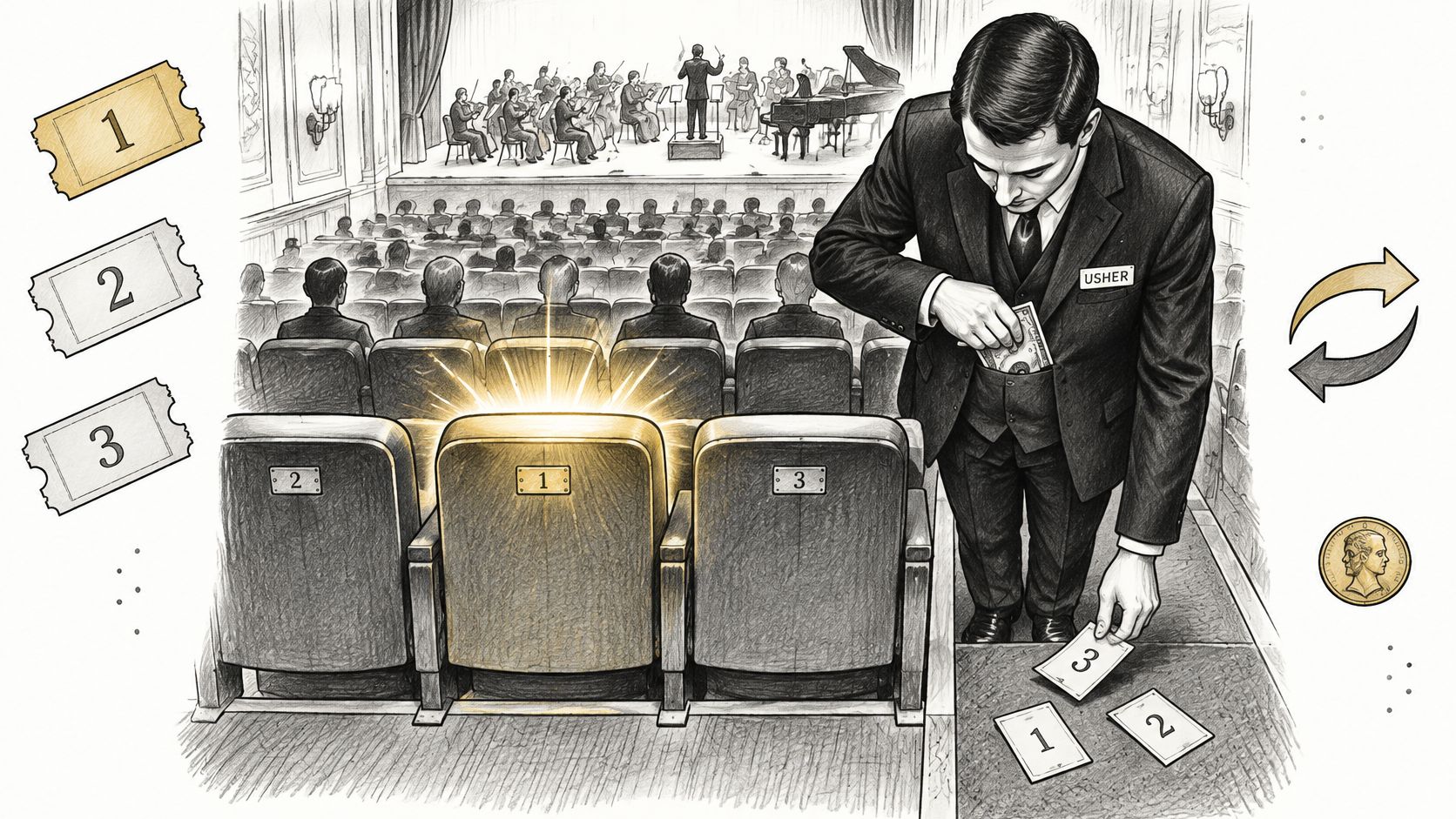
The sandwich in four moves
Sandwich trading is one of the most common MEV methods named by ethereum.org, and it runs in a fixed sequence:
- A searcher spots your pending swap in the public mempool. Your intent is public before your trade lands.
- The searcher buys the same token just ahead of you. The automated market maker reprices against you.
- Your swap fills at the worse price you just accepted.
- The searcher sells immediately after, reversing the price move and keeping the difference.
Three conditions have to hold at once: a visible pending trade, an AMM that moves price with every order, and enough room inside your slippage tolerance to make the whole loop profitable.
Plain point: MEV protection is about transaction ordering and visibility. It has nothing to do with your private key, your seed phrase or a wallet drain.
At the protocol level, ethereum.org lists proposer-builder separation and the Builder API as mechanisms meant to reduce negative MEV effects. They separate block proposal from block construction and ordering. They don't remove every form of execution risk, and they don't protect you from bad sizing or a thin pool.
This is why a copied trade behaves differently from the original. The copied swap is a separate transaction. It can land at a different point in the block, hit a different pool state, and face different impact. Scale makes the point: a 2021 Flashbots analysis of more than 1.3 million MEV-related transactions estimated at least $314 million in extracted MEV, with activity rising from roughly $180,000 in January 2020 to $57 million in January 2021, per Flashbots Collective. Automated sniping and reordering is industrial, not occasional. If you've ever watched a crypto sniper bot take a token in the first block, you've seen the same machinery that sandwiches ordinary swaps.
Two questions you can answer today. Is the chain you trade on one where pending swaps are broadcast to a public mempool? And did your last swap fill near the quote you read before signing?
Where Each Chain Needs Different Protection
The same "protect my transaction" switch does different work on different networks. What helps on Ethereum can be close to irrelevant on Solana, and neither one touches the risk of holding a perpetual.
Ethereum and BNB Smart Chain
Pending swaps sit in a public mempool and searchers watch it. Private routing is the relevant defense: the signed transaction goes to a private order-flow auction or a block builder instead of the public queue. That's the model MEV Blocker, Flashbots Protect and similar routes follow.
Solana is an ordering problem, not a visibility problem
Solana's architecture doesn't expose a universally shared public pending-transaction mempool, but validators and specialized block engines can still observe and order submitted transactions, according to a Solana MEV analysis. Jito's dontfront mechanism adds a specially prefixed public key to an instruction, and the block engine then requires the protected transaction to appear at the front of any bundle containing it.
A stronger pattern is a self-controlled bundle. Jito bundles execute sequentially and atomically, and bundles cannot be nested, so an attacker can't slip a trade ahead of yours inside that bundle. Routing through a block-engine path plus enforcing bundle position cuts the sandwich surface. It does not stop losses from stale signals, token-tax logic, thin liquidity, failed execution or a price that turns after confirmation.
Base, Arbitrum and Arc
These networks don't broadcast through a public mempool in the same way. Route choice matters less here than expected price impact and delay. On a sequencer-style chain, the honest question is how fast your order reaches the sequencer and what price you accept, not whether a searcher read it first.
Hyperliquid perps are a different risk altogether
There's no swap to sandwich. There's funding. Hyperliquid perpetuals have no expiration and use hourly funding payments, paid peer to peer from one side of the contract to the other, and Hyperliquid doesn't collect a fee on the transfer, per the Hyperliquid contract specifications. That payment is added to or subtracted from balances every hour, so a copied position can drift while the price is flat. Maximum borrowing power on HIP-3 markets ranges from 1 to 50 depending on the market or configuration.
Exposure and protection route by chain or venue
| Chain or venue | Main exposure | Protection route | What to verify |
|---|---|---|---|
| Ethereum | Public mempool sandwiching and front-running | Private RPC or builder route such as MEV Blocker, Flashbots Protect, Blink or Merkle | Inclusion rate, delay, and whether the route can fall back to the public mempool |
| BNB Smart Chain | Public mempool exposure | Private routing where the wallet or RPC supports it | That the endpoint you send through is the protected one, and what it does when the private path fails |
| Solana | Bundle-based sandwiching around block leaders | Jito dontfront instruction or a self-controlled bundle | Bundle position enforcement and what happens on failed execution |
| Base, Arbitrum or Arc | Transactions not broadcast through a public mempool in the same way | Route choice matters less than price impact and delay | Expected price impact weighed against delay |
| Hyperliquid perps | Funding and leverage rather than sandwich ordering | Not an on-chain swap route; manage with size and leverage | Hourly funding rate and liquidation distance |
Private Routes Compared on Inclusion and Backrun Value
Send the same swap through four private RPCs and you get four different results. A 2025 benchmark ran exactly that test on Ethereum, pushing 273 identical transactions through MEV Blocker, Flashbots Protect, Blink and Merkle. Three of the four routes cleared a 90% inclusion rate while Merkle landed at 74%, per the arXiv benchmark study.
Private RPC benchmark on Ethereum
| Route | Cleared 90% inclusion | Average inclusion time (blocks) | Average backrun value captured (ETH) |
|---|---|---|---|
| MEV Blocker | Yes | 1.34 | 0.00350 |
| Flashbots Protect | Yes | 1.49 | 0.00088 |
| Blink | Yes | 1.56 | 0.00173 |
| Merkle | No (74%) | 1.86 | 0.00108 |
Inclusion is the first number, not the only one
A route that hides your trade but misses the block has failed you twice. No sandwich. No fill either. Hiding a transaction is only half the job; a sealed envelope that never arrives protects nothing. MEV Blocker, Flashbots Protect and Blink each stayed above the 90% mark with average waits between 1.34 and 1.56 blocks, so most trades confirmed inside two blocks. Merkle filled less often and took longer at 1.86 blocks. Concealing the trade and confirming the trade are separate tasks, and a route owes you both.
Read the table as a snapshot. Route performance shifts with the day, network conditions, the token and the size of the order. A single benchmark gives you a starting point for your own measurement, and the spread across these four routes is the reason to measure at all.
Why backrun value shows up in your favor
Private routing does two things at once. It hides the swap from predators, and it puts the trade in front of searchers bidding for the right to backrun it. A backrun is a profitable trade placed immediately after yours, and when the route auctions that slot, part of the profit returns to your address. In the same test, average backrun value captured ran highest on MEV Blocker at 0.00350 ETH and lowest on Flashbots Protect at 0.00088 ETH. Small numbers per trade. Across hundreds of swaps, they stop being noise.
A route with a higher inclusion rate and a shorter delay is the better outcome. A route with a slightly better rebate and a habit of missing blocks is not.
Four numbers to track on your own trades
- Inclusion delay: how many blocks, or seconds, between signing and a confirmed receipt.
- Revert rate: how often the protected transaction fails outright instead of filling.
- Slippage against the quote: the gap between the price you read and the price you got.
- Rebate received: any value returned to your address rather than kept by the route.
These four numbers are the verification step. A protected RPC works as a routing policy you check on your own chain, on your own trades, against your own quotes. None of it changes market risk. A clean execution on a token that dumps is still a loss, and you can lose what you put in.
How to Set Slippage and Deadlines on a Swap
Two settings on the swap screen decide how much room a searcher has to work with, and most traders never touch either one.
The MEV Blocker documentation describes the attack plainly: a hostile transaction goes immediately before your trade, another goes immediately after, the first moves the price and the second profits from the move. Your order fills at a worse price. The attack depends on AMM mechanics, transaction ordering and the slippage you permitted.
Three controls cover most of that exposure.
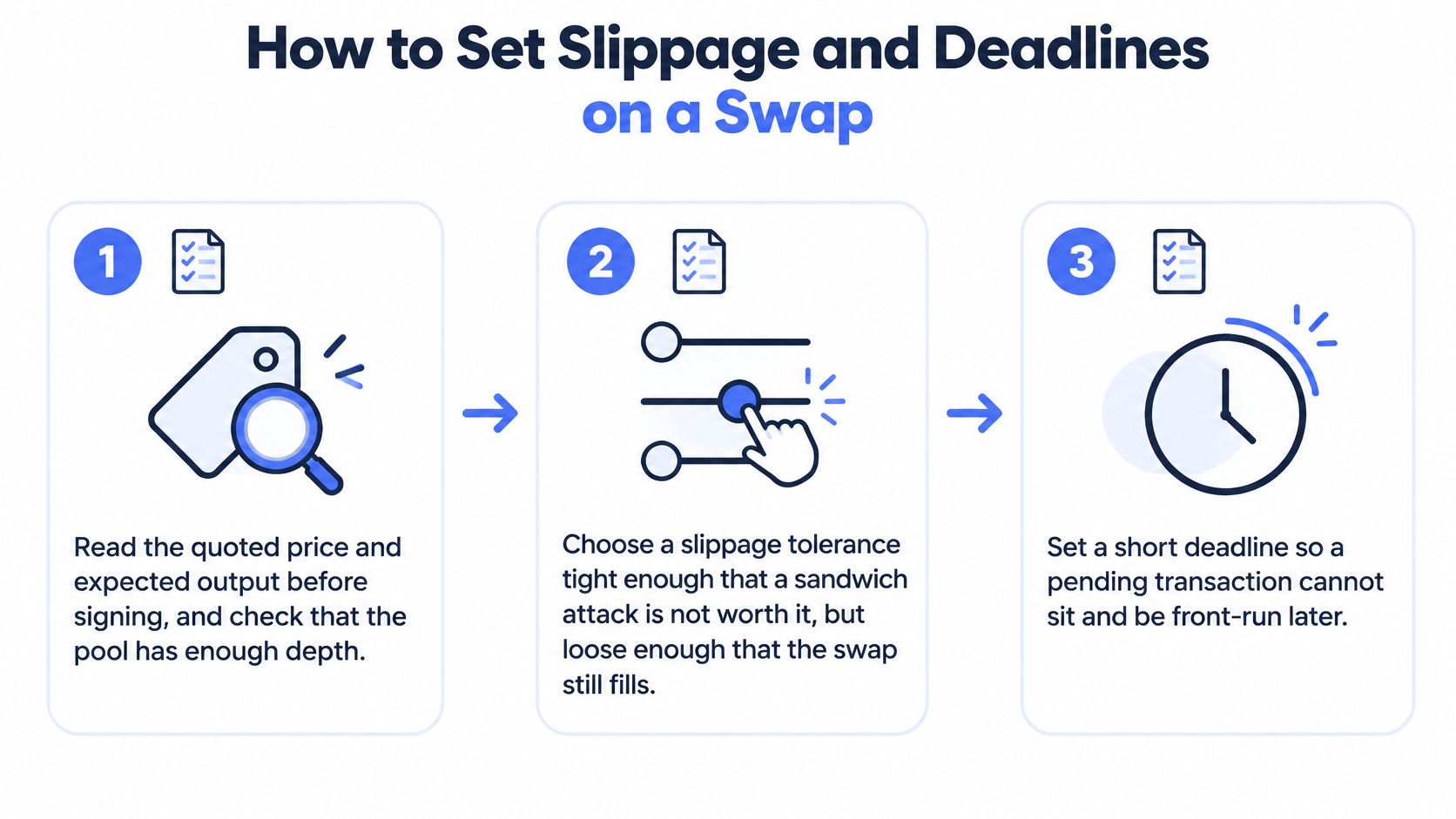
Six steps, with the slip that ruins each one
- Read the quote and the expected output before signing. Check the pool depth for that specific token, not the pair generally. The quote is your baseline, and the common slip is signing without looking at depth at all.
- Set slippage from liquidity and volatility, not habit. Too tight and the swap fails when price moves before execution. Too loose and a searcher has room to push your fill while the transaction stays valid, which the slippage tolerance guide walks through in more detail. The common slip is leaving a default in place after liquidity has changed.
- Set a short deadline. A transaction that sits pending for ten minutes can fill long after you stopped watching. The common slip is an open deadline on a volatile memecoin.
- Size the order against the pool. A large order into a thin pool moves the price by itself, before any searcher gets involved. Nothing in the routing layer fixes that.
- Choose the chain route deliberately. On Ethereum, that means picking the private RPC using the inclusion and backrun figures above rather than whichever one your wallet defaults to.
- Compare the fill to the quote after confirmation. Write down the gap. That running record tells you more about your real execution cost than any benchmark table.
A copied buy is a separate transaction, so identical settings can still produce a different fill from the trader you're following. Automatic execution transfers risk to you. It doesn't promise a matching fill, and users can lose what they put in.
Why Private Routing Does Not Mean Full Protection
A wallet that shows an MEV protection toggle tells you where your transaction goes. What happens after it arrives is a separate question.
An academic analysis of private order flow on Ethereum identified 2,932 private sandwich attacks affecting 3,126 victim transactions, with approximately $409,237 in aggregate user losses and $293,786 in attacker profits, per the private sandwich attack analysis. Each of those trades traveled a private route. The channel kept the order out of the public mempool and still delivered it to someone positioned to extract value.
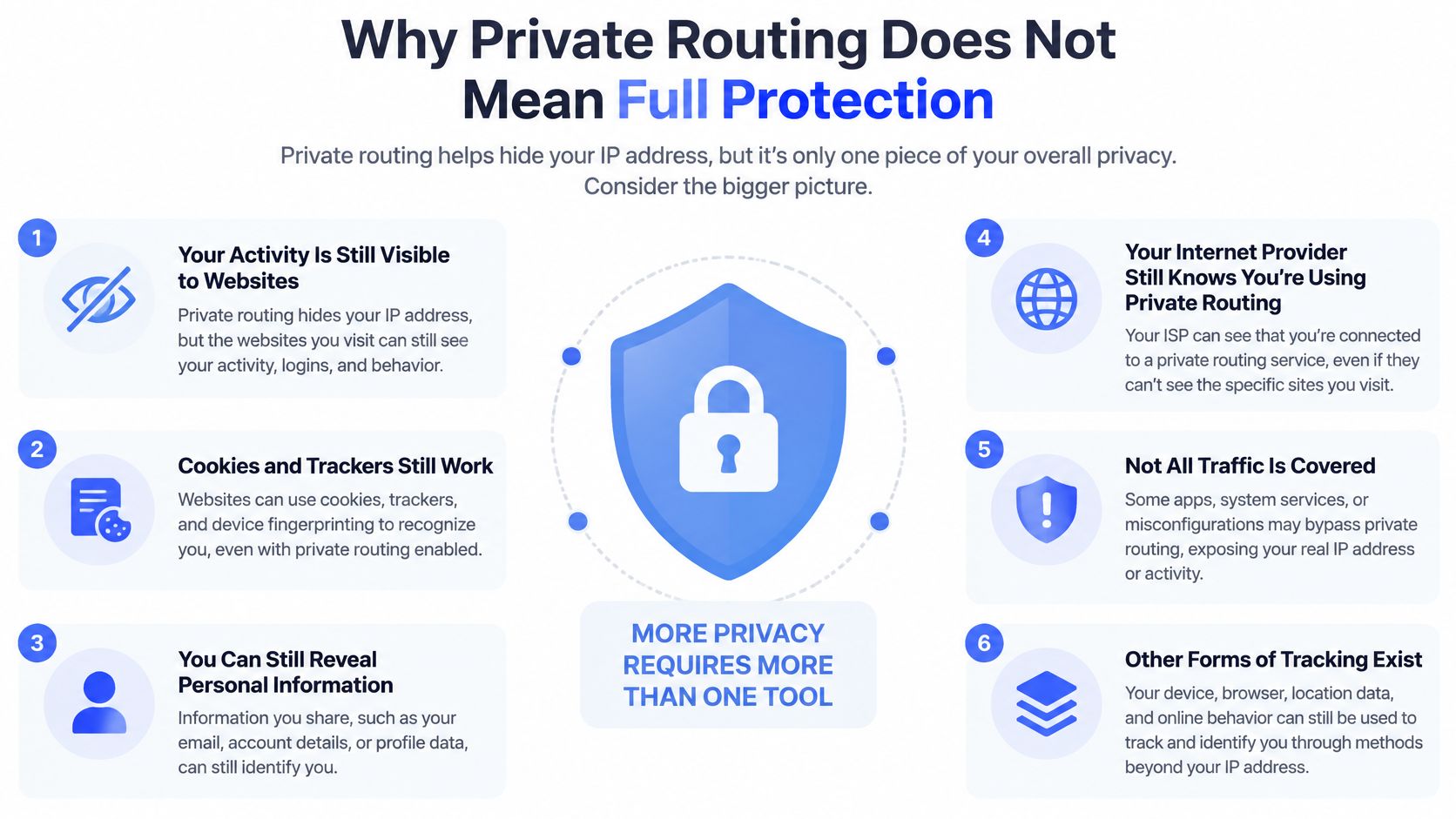
Four checks before you trust a route
- Fallback behavior. Does a failed private route return an error, or broadcast the transaction to the public mempool? Some providers refuse to broadcast publicly and leave the trade unfilled instead. That is a different failure, and still a failure.
- Who observes the order flow. A route controlled by one builder gives that builder first sight of every order. An auction open to many splits that visibility across competitors.
- Builder concentration. A 2025 academic analysis of Ethereum data from January 23, 2024 through April 16, 2025 found that two MEV builders had become dominant by August 2024, per the builder market analysis on arXiv. Concentration in building means concentration in whoever sees your order first.
- Slippage and deadline. Private routing runs alongside tight limits. A private fill at a bad price is still a bad fill.
Latency is a real cost
A private relay adds a step between signing and inclusion, and that step costs time. The SoK on MEV countermeasures catalogs how each protection mechanism reshapes the path a transaction takes to confirmation, so routing policy sets confirmation speed alongside execution price. For a copied trade the delay matters more than for a manual one. Buys and sells fire while you sleep, and a fill that lands late drifts out of step with the trader you follow.
The walkthrough below covers the failure modes that appear when protection is treated as a checkbox rather than a policy.
Practical rule: test a new route with one small trade. Confirm the fill, check the delay, then decide whether automatic execution belongs on that path.
Treat MEV protection as a routing and execution policy you verify per chain and per trade. On a volatile memecoin, losses from the token itself routinely exceed the MEV cost you set out to avoid. Users can lose what they put in.
Set Your Limits Before You Copy a Trade
Routing lowers one kind of exposure. It doesn't make volatile tokens or perps using borrowed margin safe. The last decision is how much you can afford to lose, and that decision is yours to make before anything executes automatically.
1. Read the record first. Open copy.top/traders and go through a trader's public page: realized pnl, win rate, median hold time, open positions and recent trades. Look for a hold time you can live with and a position set you understand. A good month tells you less than a consistent pattern across many. Past performance does not predict results.
2. Set a size you can lose, then switch on the guardrails. Start with a buy size small enough that a total loss doesn't change your week. Keep the slippage and deadline limits from the steps above. Then set the controls that are off until you turn them on. Max impact offers 1%, 3%, 5%, 10%, a custom value or off, and it starts off. Stop loss per trader offers -25%, -50%, -80%, a custom level or off, also off by default, and when it triggers it sells everything left in that position. A worked example of sizing across several positions is in the position sizing guide.
3. Compare the first fill to the quote. Run one small copy and check the gap between quoted and actual price, plus the inclusion delay and any rebate returned. On Hyperliquid perps, add two more checks: the hourly funding rate and your liquidation distance. Funding is charged every hour, so a position can lose money while the price sits still.
Copy trading carries risk. Users can lose what they put in. Nothing here is financial advice or a recommendation to buy any specific token. copy.top is non-custodial, you copy from your own wallet, and it isn't affiliated with fomo, pumpfun, Hyperliquid or Polymarket.
Copy trading moves fast, but execution quality is something you can check. copy.top gives you named traders with public numbers, automatic copying of both buys and sells from your own wallet, and guardrails like max impact and stop loss per trader that you switch on before anything runs. Pick a trader on copy.top, start at a size you can afford to lose, and compare your first fill to the quote.